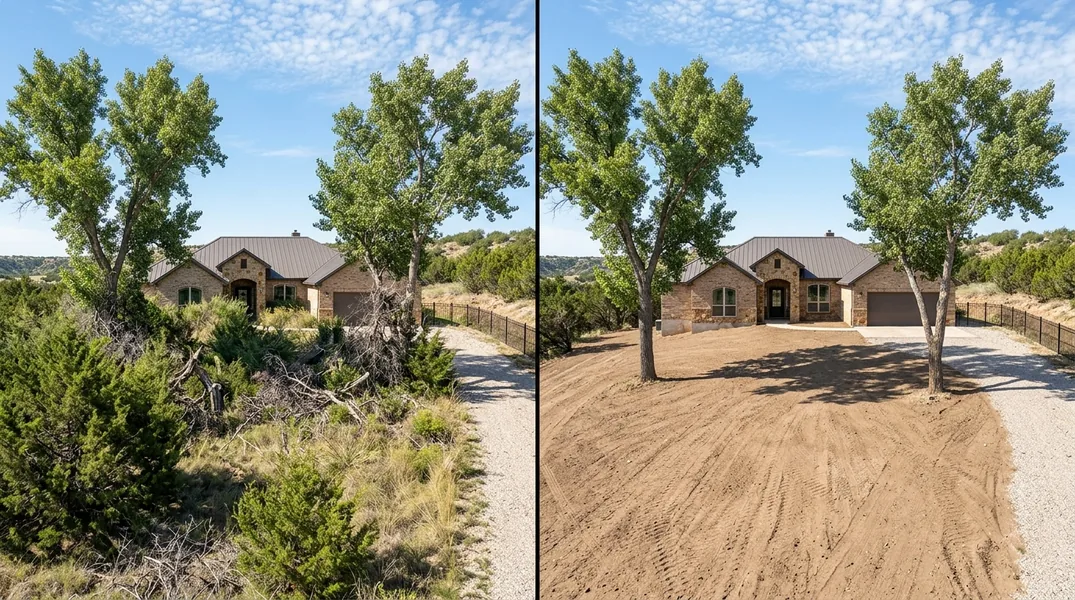
Understanding Siberian Elms and Their Weakness
Siberian elms have become a common sight throughout Amarillo, prized by many homeowners for their rapid growth and ability to thrive in our harsh Texas climate. These trees can grow 40 to 50 feet tall and provide valuable shade in a region where summer temperatures soar. However, their popularity masks a significant structural problem that has caused countless property damage incidents across the area. The wood of Siberian elms is inherently weak and brittle, making them far more susceptible to breaking than native hardwoods or other shade trees.
The fundamental issue lies in the tree's wood density and fiber structure. Siberian elms produce wood that lacks the strength and flexibility needed to withstand the stresses of heavy winds, ice accumulation, and the weight of dense foliage. This weakness becomes increasingly apparent as the tree matures. A 30-year-old Siberian elm may look healthy and full, but its branches are already at risk of failure. When Amarillo experiences spring storms or the occasional ice event, Siberian elms are often the first trees to fail, dropping large branches or even splitting down the middle. This unpredictable failure pattern is why many arborists and tree care professionals recommend careful monitoring or removal of these trees, especially those growing near homes, vehicles, or power lines.
Common Siberian Elm Problems in Amarillo's Climate
Living in the Texas Panhandle means dealing with weather extremes that Siberian elms simply cannot handle well. Our spring storms bring high winds that these brittle trees struggle to resist. Unlike oak or ash trees, which have evolved to flex and bend with strong gusts, Siberian elms tend to snap rather than sway. The problem is compounded by our occasional ice storms, which add tremendous weight to branches that are already structurally compromised. A coating of just half an inch of ice can be enough to cause major branch failure in a mature Siberian elm.
Beyond storm damage, Siberian elms in Amarillo are also highly susceptible to disease and pest infestations. Dutch elm disease, while less common here than in other regions, still poses a threat. More pressing are aphids and spider mites, which thrive in our dry climate and can weaken the tree further. Additionally, Siberian elms have aggressive root systems that often cause problems with foundations, sidewalks, and underground utilities. Homeowners frequently discover that what seemed like a good shade tree has become a liability, with roots buckling concrete and branches threatening their roof.
Signs Your Siberian Elm Needs Removal or Trimming
Recognizing the warning signs of a failing Siberian elm can help you take action before disaster strikes. Look for dead branches throughout the canopy, particularly in the upper portions of the tree. If you notice large branches hanging at odd angles or partially detached from the main trunk, that is a clear signal of structural failure. Cracks or splits in the main trunk, especially those that run vertically, indicate that the tree's wood is breaking down and losing integrity. You should also watch for branches that are rubbing against your roof, gutters, or power lines, as these create both immediate hazards and ongoing damage.
Another warning sign is excessive branch drop, where the tree sheds large branches even during calm weather. This suggests the tree is no longer able to support its own weight distribution. If you see mushroom-like growths (fungal fruiting bodies) at the base of the tree or on major branches, this indicates internal decay that weakens the wood from within. Some homeowners also notice that their Siberian elm has become noticeably more sparse or asymmetrical, with growth concentrated on one side. This imbalance creates uneven weight distribution and increases the risk of toppling or major limb failure. When you spot these signs, it is time to call a professional. Tree Trimming & Pruning can sometimes extend the life of a marginal tree, but removal may be the safest option.
Tree Removal Near Me: When to Call a Professional
Deciding whether to remove a Siberian elm is not always straightforward, and this is where professional expertise makes all the difference. An experienced arborist can evaluate the tree's structural integrity, assess the risk to your property, and recommend the best course of action. Some Siberian elms can be managed with aggressive Tree Trimming & Pruning to remove dead wood and reduce weight, while others are too far gone and pose an unacceptable risk. If the tree is growing within 20 feet of your home, over your driveway, or near power lines, professional assessment becomes even more critical.
Tree Removal of a large Siberian elm is not a DIY project. These trees can be 40 to 60 feet tall with massive branch systems, and improper removal can cause severe property damage or personal injury. Professional tree removal companies have the equipment, training, and insurance to handle the job safely. They can also grind the stump and haul away debris, leaving your yard clean. Amarillo Tree Service has been removing problematic trees throughout the region for years and understands the specific challenges that Siberian elms present. If you have a Siberian elm that concerns you, call (806) 557-3244 or request a free estimate today.
Alternatives and Prevention Strategies
If you are considering removing a Siberian elm, you may be wondering what to plant in its place. Fortunately, there are excellent alternatives that thrive in Amarillo's climate without the structural weaknesses of Siberian elms. Native species like bur oak, hackberry, and green ash are far more durable and better adapted to our weather extremes. These trees have stronger wood, deeper root systems, and are less prone to breaking. They may grow more slowly than Siberian elms, but they will provide reliable shade for decades without the constant worry of branch failure.
If you decide to keep a Siberian elm, regular maintenance is essential. Professional Tree Trimming & Pruning every two to three years can remove weak branches before they fail and improve the overall structure of the tree. Remove any dead wood promptly, and avoid topping the tree, which actually makes the problem worse by forcing it to produce weak, fast-growing branches. Proper watering during dry spells and mulching around the base can help keep the tree healthier, though this will not eliminate the inherent weakness of the wood itself. Cable support systems can sometimes be installed by professionals to provide additional support for major branches, though this is typically a temporary measure.
What to Expect During the Removal Process
Understanding what professional Tree Removal involves can help you prepare and know what to expect. The process typically begins with a site assessment and discussion of your goals. The crew will plan the safest way to take down the tree, considering nearby structures, power lines, and property lines. Large trees are usually removed in sections, with each piece carefully lowered to the ground using ropes and rigging equipment. This methodical approach prevents damage to your home, landscaping, and neighboring properties.
After the tree is down, the trunk and branches are typically chipped or cut into manageable pieces. Stump Grinding is often offered as an add-on service, which completely removes the remaining stump and grinds it into mulch. This prevents the tree from regrowing and eliminates a tripping hazard. The entire process, from start to finish, usually takes a single day for a residential tree. Professional crews are experienced at working efficiently while maintaining safety and minimizing disruption to your neighborhood. When you contact Amarillo Tree Service at (806) 557-3244, our team can provide detailed information about what your specific removal will entail.
Looking for a professional tree service contractor in Amarillo? Amarillo Tree Service responds fast for all your tree service needs.
Get a Free QuoteOur services: Tree Removal · Tree Trimming & Pruning · Stump Grinding